Past
I have been using WordPress (WP) since 2010. Back then there wasn't a lot of open-source software (OSS) choices for hosting your own website with a blog. The thought of having a live website 24/7 that could be edited with a web browser and access to internet was what intrigued me.
Present
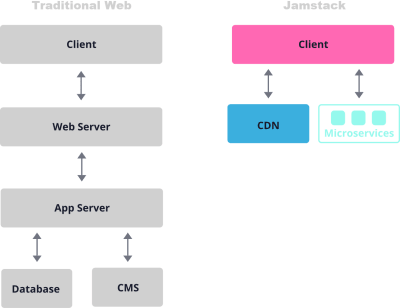
The Monolithic architecture of WP made it so massive and bulky for a simple blog site with a single-user, it was hard to get away from it until now.
Say hello to the Jamstack architecture generated by a static site generator, Eleventy:
- JavaScript
- APIs
- Markup
The Jamstack architecture has many benefits, whether you’re building a large e-commerce site, SaaS application or personal blog.
Better Performance
Why wait for pages to build on the fly when you can generate them at deploy time? When it comes to minimizing the time to first byte, nothing beats pre-built files served over a CDN.
Higher Security
With server-side processes abstracted into microservice APIs, surface areas for attacks are reduced. You can also leverage the domain expertise of specialist third-party services.
Cheaper, Easier Scaling
When your deployment amounts to a stack of files that can be served anywhere, scaling is a matter of serving those files in more places. CDNs are perfect for this, and often include scaling in all of their plans.
Better Developer Experience
Loose coupling and separation of controls allow for more targeted development and debugging, and the expanding selection of CMS options for site generators remove the need to maintain a separate stack for content and marketing.